
Interview Highlights: Nonsurgical Healing of ACL Rupture
Rain Xiang WSP

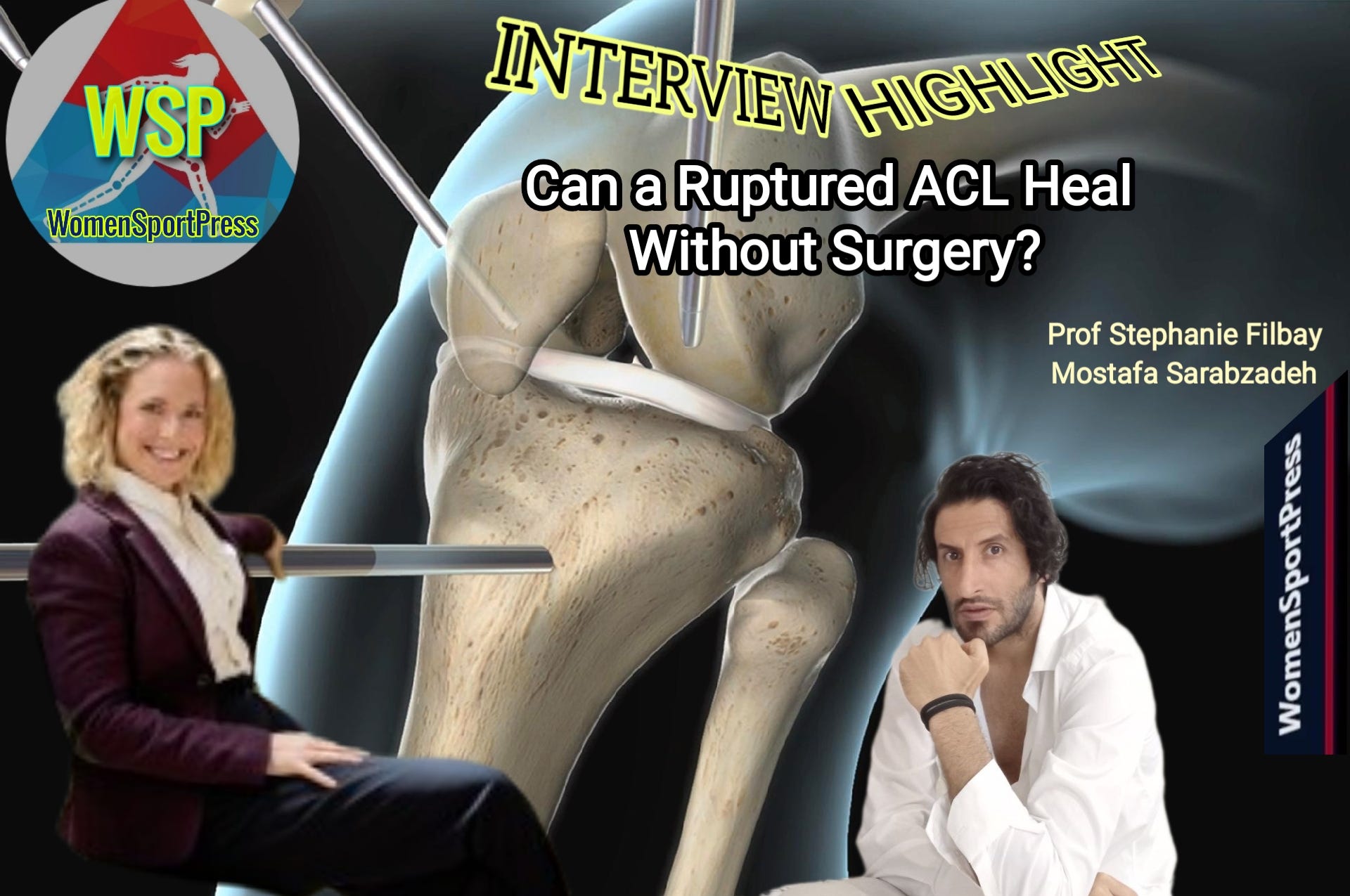
Should everyone ask whether it is possible to heal a ruptured Anterior cruciate ligament (ACL) without surgery or whatever we would call as invasive methods a decade ago, no expert or leading researcher working in this area would dare to say " yes, it is likely ". But now, all the thanks to the recent advancements in research and bracing technology in rehabilitation by which our researchers and physiotherapists may claim the full recovery of ACL tear without surgical procedures. However, there are still a large number of contradictory comments on these claims and findings predominantly made by surgeons, making any scientific debate or research on ACL rehabilitation a necessity more than before.
ACL rupture has been reported to associate with the development of osteoarthritis irrespective of severity, followed by long-term physical and psychological outcomes. These debilitating symptoms and comorbidities may make individuals think that a torn ACL has limited ability to heal on its own so surgery would be the only option on the table. But new studies have suggested otherwise, reporting physical therapy and bracing protocol could be as much effective as ACL reconstruction, or even in some cases with better results on knee stability and function.
The good news is no matter how competitive your sport is, these new findings guarantee you a safe and relatively quick return to your career. How, through what mechanisms and to what extent, are the type of questions you all might have raised now, and the answers will come within our today's talk through our host—Mostafa Sarabzadeh— and our wonderful guest, who is one of the number one and leading scientists pioneered non-surgical ACL recovery, who also received a national award named " Dame Kate Campbell " because of the substantial impact she made on the healthcare practices through groundbreaking research projects. Yes, you guessed it right, Prof Stephanie Filbay from Centre for Health, Exercise and Sports Medicine, Department of Physiotherapy, University of Melbourne, is here with us.
Part 1: Life Updates

Mostafa Sarabzadeh: Thank you so much for considering my work to join our program in WomenSportPress. Stephanie, if you have any updates with your days? which I'm sure you've been so much busy as an academic.
Prof Stephanie Filbay: Thanks for the invitation.Well, still summer here in Melbourne, which is always nice weather. Nice and hot, unpredictable, though. So 43 degrees one day and then 17 the next day. That's what we get here in Melbourne. But yeah, it's always a nice time in Melbourne around summer. So, I've been taking some trips on the weekends to visiting some cities, which is always nice.
Work is busy. So, I'm full-time research. I'm a physiotherapist, but I'm now currently full-time in research, which means, you know, running and doing a lot of different studies at once. So, it's always a bit of a juggling act, I suppose, juggling lots of different research projects and moving them along. And I'm sure we'll get into some of those projects a bit later in the podcast.
Mostafa Sarabzadeh: As far as I know, there will be some researches on the way to get published by you in the case of non-operational ACL rehabilitation. So could you please share with us how it goes with you?
Prof Stephanie Filbay: Sure. two of the main areas that we're moving forward in relation to non-surgical treatment; One is related to informing decision-making when it comes to ACL surgery or rehab alone. So, who is a good candidate for surgery and who is a good candidate for non-surgical treatment? And informing the patient so they can make a decision that aligns with their needs and preferences.
“Bias towards surgery in Australia”
we have done quite a bit of evaluation in Australia and found that the information that people are given isn't based on evidence. And it often is more biased towards surgery, saying that surgery is needed if you want to return to sport.
We've developed an online patient decision aid (Available here) that clinicians can use and patients can use, and they can work through that to try to make an informed decision by weighing up the pros and cons.
And then the other topic we're doing a lot of work around is whether the ACL can heal and what treatments can be done to facilitate healing. We've started a large multi-site randomized control trial in Australia, where people are randomized to either ACL reconstructive surgery or the cross-bracing protocol, but we're also doing quite a bit of work around predicting who's most likely to heal, the relationship between healing and knee function.
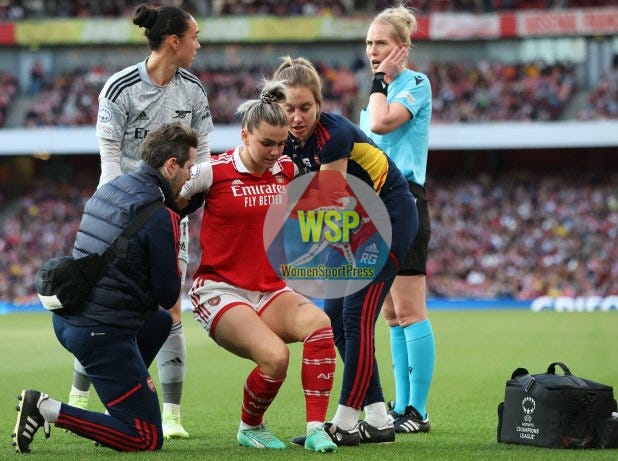
Mostafa Sarabzadeh: That's wonderful. I personally guess the more we work on this topic the more we need to do, as there has lots of gaps, specifically misconceptions made by not only patients and public but also by clinicians and the healthcare professionals, which is something as alarming sign because it directly affects the people's overall health. How would it be like to be a researcher on knee health as someone who has already got her ACL ruptured several time?
“Having lived experience of ACL injury could help your research journey “
Prof Stephanie Filbay: I think it certainly helps to have lived experience in the area that you're researching. Definitely, I've done a bit of qualitative research as well as quantitative, which is interviewing people with ACL injury experiences. And I think it really helps to know the psychological side of it as well.
I'm also a scientist, so I'm aware that my perspective is just one, you know, and so I like to think it doesn't bias my perspective, but it does help, I think, to understand and to empathize and relate to people who have had ACL rupture.
My PhD was on long-term quality of life after ACL injury and I think having that lived experience really did help. I had ACL reconstruction and I was 18 at the time, and I was told that if I ever wanted to return to sport, I had to have surgery. That was some years ago now, but our recent survey found that most people are still told that today. So it hasn't really changed over time.
Having lived that, and then I returned to soccer and re-ruptured the graft and had revision surgery. And then went on to rerupture that graph. And then I had the experience of still trying to be active with, you know, a lot of knee pain, swelling and poor knee function. And then the onset of osteoarthritis. So that trajectory over time is unfortunately quite a common experience for people who ruptured their ACL.
Mostafa Sarabzadeh: So that would be great to have those experiences as someone who is working on this area, but we couldn't be that much unfair to wish everyone to get those experiences of injury (Laughing). Back to where you ruptured your ACL, how did you do psychologically? I'm saying this because I know for the girl who was at 18 with not having enough knowledge, it could be challenging.
“loss of athletic identity”
Prof Stephanie Filbay: Of course, it's challenging. We call it from the research perspective a loss of athletic identity or sporting potential, especially if you're quite a talented athlete and you're young with ambitions to play professional sport. And so when something like this happens after surgery, I mean, I think it often doesn't hit a lot of people before surgery until they wake up from that surgery and realize just how painful and the core function and how long and challenging that rehab is gonna be.
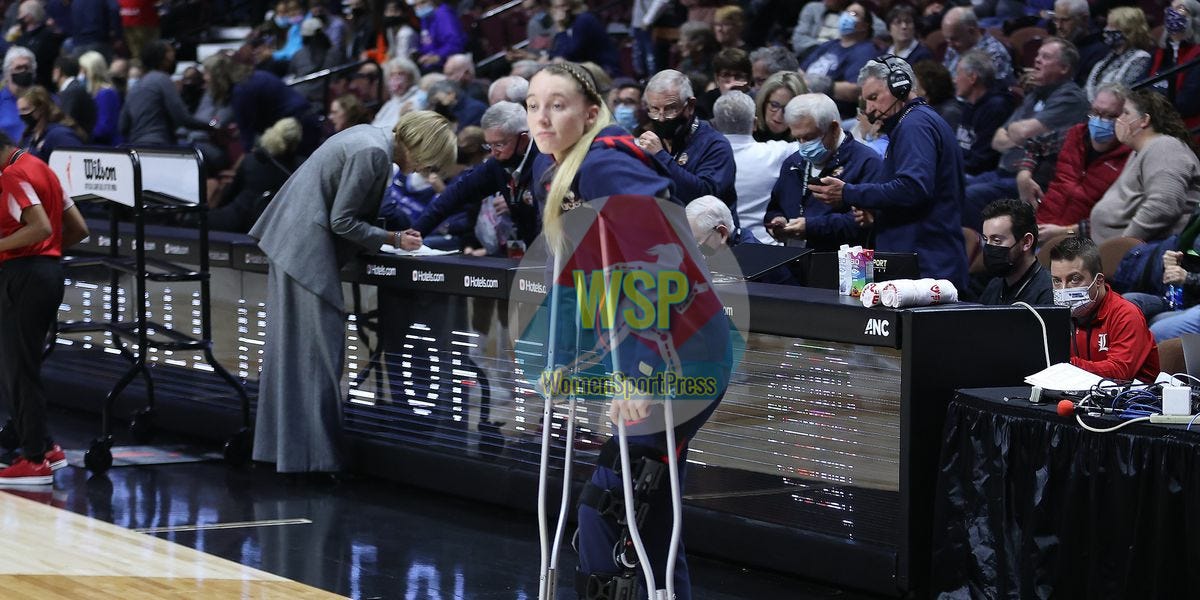
I think they then have to suffer kind of the two folds: being out of a sporting team and having to step away from the sport that they typically play their entire live. Then the questions come like these: will I be able to play again? Will I be able to perform at that same level?
“Setbacks come on your way”
So like in my case, I had a Cyclops lesion and had to go back in for surgery. And after the second surgery, the tibial screw extruded itself and unscrewed itself from the bone, and I had to go back in to have surgery to have the screw removed. So, lots of somewhat setbacks, I suppose, over time as well.
'‘ Finding another form of physical activity in your ACL recovery''
Reconsidering or adapting to the role that sport plays in your life or in some cases, ignoring the knee function and pushing on anyway to try to perform in sport is challenging psychologically. As part of my PhD, I found that people who could step away from competitive sport and find another form of physical activity, like perhaps the gym or jogging or something that's lower demands on the knee, tended to be able to maintain a really high quality of life.
Mostafa Sarabzadeh: So you never back to the professional sport after your surgery?
Prof Stephanie Filbay: No. I think those setbacks, I meant two and a half years before returning and then another injury and then another two years. Like it took such a chunk of time, largely due to the graft reruptures. That's. Yeah, and I guess the knee issues as well. It was always sort of a bit swallowed and painful and it never really returned, recovered fully. And then I was at the stage where I just felt you're a bit old, you're too old, right? Yeah, so it's something that a lot of young females, I think, have to contend with. Definitely.
Mostafa Sarabzadeh: maybe that's because our system is not well prepared to deal with those cases. I mean, the young girls or young athletes who kind of sustain ACL injuries several times and want to get back to a sport.
Prof Stephanie Filbay: yes they don't necessarily get the same support. If you're already a professional athlete, you get a lot of support to get back to sport. Everyone's pushing you, that's the main goal. You've got rehab, you've got support. But young females especially sometimes get less support than their male kind of parts.
“ACL recovered players are overlooked for another player who doesn't have an ACL injury”
So I think, you know, especially if they're on the trajectory but not quite there yet, they can often therefore be overlooked for another player who doesn't have an ACL injury.
Mostafa Sarabzadeh: yes and a thing in your case is, who knows, if you got to continue with your sports and the soccer, we would have missed someone like you in the context of physiotherapy.
Prof Stephanie Filbay: Who knows? I might be in, yeah, who knows. I was in my first year of physio when I ruptured my ACL. So I still would have been a physiotherapist, but I might not have gone into research. Who knows?
Part 2: Vulnerability of ACL
Mostafa Sarabzadeh: I know what I'm saying is not within your main research expertise. But I want to know your overall perspective on vulnerability of ACL as a whole and the persons who might be high risk individuals to get the ACL ruptured.
“Increased tibial slope—as a predictor of ACL injury”
Prof Stephanie Filbay: Okay. One of the areas which is progressing is anatomical risk factors, so like the increased tibial slope is coming up as a predictor of injury. We know there is also a genetic component. There's both genetic and there's a family history. In my own case, both my parents have ruptured their ACL, and I have two uncles that have had 3 ACL surgeries each. So, and that's really common.
Obviously, predisposing yourself to high risk sports is gonna put yourself at risk in particular if you have other risk factors. So cutting and pivoting sports, in particular contact sports. We also know young females has a high risk relative to the same exposure as males in those sports. We don't know necessarily why. We hypothesize a lot of reasons. It can be both environmental and societal as well as genetic and other factors. There's body of research suggesting that, women don't get the same opportunities as men get, and they may develop differently in terms of strength and muscular control.
“ landing muscles’ biomechanics are key “
It's different depending on the culture that you're in, and the country you're in. You know, there's been a lot of body of work looking at people with increased dynamic knee valgus, hip weakness, which could predispose somebody to non-contact injuries. So certain landing biomechanics, the certain things that we try to target with injury prevention programs, are effective at reducing the likelihood of injury. So I guess, that's a risk factor that if you're not performing injury prevention, that would place you at greater risk of ACL rupture as well.
Part 3: ACL Rupture & Monitoring
Mostafa Sarabzadeh: Thank you, Stephanie. We're moving now to the next part, which is, ACL rupture and monitoring. Let's get this section started by imagining we have an athlete with ACL tear who comes up ask whether or not surgery is needed in his / her case. The question is, what's contributing factors derived by your new updates may set different cases apart from one another to pursue therapeutic modalities.
“ It can be a good idea to try rehab first “.
Prof Stephanie Filbay: Yes. So my thinking there, firstly, if someone approaches me with “ do I need surgery?” In most cases, I think the answer is “ it can be a good idea to try rehab first “. Because the reason is we don't yet know who needs surgery and who doesn't. We can't predict with any certainty who will have a successful outcome with rehab and who won't, so we need to explain that to them.
We need to explain that around about 50% of people who try rehab have a successful outcome, and around about 50 will decide to have surgery.
So what do you have to risk there? It's typically time. So at least three months of rehab to see whether your knee will become stable. Because if your knee doesn't become stable, then we'd like to recommend surgery because we don't want people to have an unstable knee.
“Three-month rehab first for STABLE KNEE”
We are seeing a lot of associations between types of injury and healing potential. So we haven't publish that yet. We're running a predictive model so we can try to predict who's most likely to heal and who isn't, because that will likely help to inform decision making. If you're more likely to heal your ACR with non-surgical treatment, then you're more likely to be someone that benefits from non-surgical treatment. But the thing is, if you try rehab first, you can always have a primary reconstruction later.
As a physiotherapist, we have to make sure that the knee doesn't have any instability of giving way because we wanna avoid that. We wanna protect the knee health, right? let's say that you have two scenarios, right? Someone has early reconstruction and the other one has tried rehab first. And this is a young female soccer player. So after both of those treatments, she returns to soccer maybe a 14 months after injury. But, around one in three young females will tear their graft after ACL injuries. It's quite common in that group.
So now let's say at 18 months post-surgery, she suffers a new knee injury with each treatment pathway. So if she had early surgery and tore her graft, like 90% of people who tore their meniscus or cartilage at that time, she's likely to undergo a revision, a second ACL reconstruction, which we know has poor outcomes compared to primary surgery.
On the other hand, if that person tried rehab first, returned to sport and had a new knee injury. So then the person's options are, nonsurgical treatment again or surgical treatment for the FIRST TIME, where both have reported good outcomes? So in a way is, it's also postponing the likelihood of needing multiple surgeries, and that's one another key benefit to trying rehabilitation first.
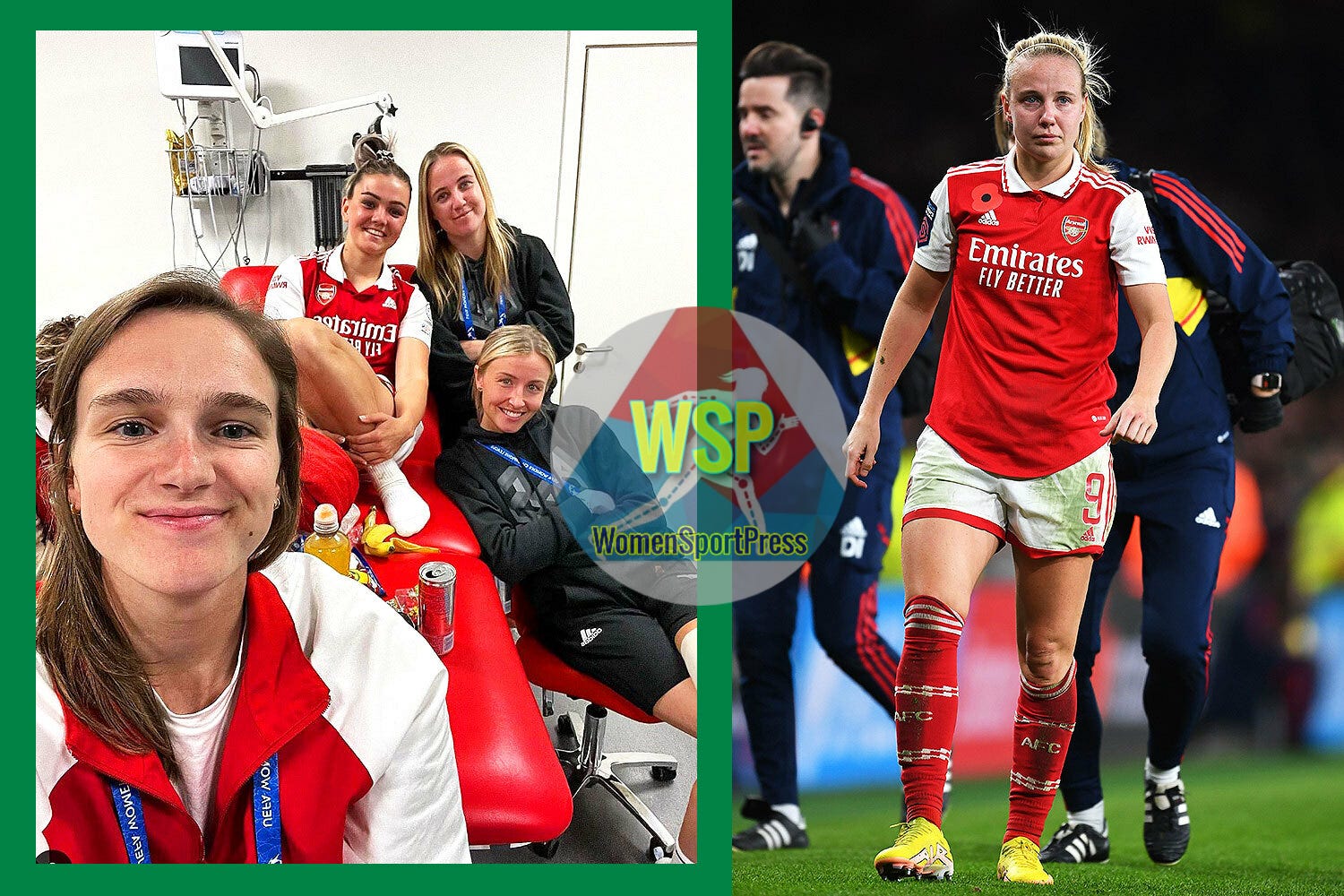
Mostafa Sarabzadeh: So from what you just said, it would be a kind of multifaceted and really complex decision to evaluate all those possibilities, although still it would be better off to go with rehabilitation as a win-to-win situation, whether we choose a delayed surgery or ending up with rehabilitation alone.
'‘ If there are multi ligament ruptures with gross instability surgery works better ‘
Prof Stephanie Filbay: Yeah, so there's some exceptions, like if there are multi ligament ruptures with gross instability, you know, if an MCL rupture, PCL rupture, ACL rupture, you not are going to try non surgical treatment in that case because there's so much functional or passive laxity and stability, it's unlikely to be successful. Should a timeline to return to sport is key, with we may be able to get back sooner through non-surgical treatment, but we also may have to delay and then have subsequent surgery and then another 12 months on that. So all these pros and cons need to be weighed up.
But the thing is it's less common to have an isolated ACL rupture. So the cross bracing protocol in the work we published in BJSM, the majority had, you know, half, over half had meniscus injuries and over half had MCL injuries and they seem to have healed with the brace. So most common and injuries have a chance of healing non surgically as well.
“The period of progressive immobilization through bracing protocol may help heal other KNEE injuries at the same time”
Mostafa Sarabzadeh: I don't know if this is in your authority to answer this question, but I would love to hear your words on how do you think the Health Ministry and the law as a whole can step into improve evidence uptake and support informed decision to avoid biased consulting.
“people aren't receiving informed consent legally”
Prof Stephanie Filbay: The law. That's a good one. I mean, people do have legal obligations, medical practitioners, physiotherapists in particular. For more invasive treatments like surgery, they should have informed consent to undertake certain procedures and interventions. And in some cases, based on our research, people aren't receiving informed consent legally, what people are expressing is that they're not actually told any downsides to the surgery. They were only told about pros or good sides. And I think often it's when they're in the hospital lying in bed about to go and be wheeled into surgery that someone comes out with a big checklist and the first item you know is you, this may cause death. You may bleed out during the surgery and you need to sign away, right? that’s it.
So I'm not suggesting any laws are changed or anything, but I do think there's legal obligations to provide accurate information that's based on evidence so that people can make informed decisions.
Mostafa Sarabzadeh: So that's why Stephanie, you and your team created a patient's decision aid?
Prof Stephanie Filbay: If I could do that? Yeah, it's not just surgery. So there could be a case where, let's say, a physiotherapist, could be telling people you don't need surgery, you'll have a great outcome. That's not only in support of non-surgical treatment, so it does work both directions.
We found that around 90% or nine out of 10 surgeons had told patients that they need to have surgery or that surgery will have better outcomes, baselessly. But it's not necessarily a fault of their own if they're passing that on to patients. The referral pathways and the order in healthcare system need to be educated.
Part 3: ACL rehabilitation
Mostafa Sarabzadeh: So in one of your RCTs (CANON), you found that one-quarter of people with ACL injuries naturally cope with surgery. So my question is, how should we know if our patients have such coping potential?
Prof Stephanie Filbay: It was more, I was 50 percent, half of those that start rehab coped. They were randomly allocated, so not by choice. So the strength of that being a randomized control trial is that it accounts for differences. So a lot of time, the evidence informing decisions is a poor research design where the groups aren't comparable. But in that case, if it's a randomized control trial, the benefit of that is the groups are comparable. I had a successful outcome—all three of those rehab only, early surgery or delayed surgery groups had similar outcomes across a range of measures at 2 years, 5 years and 11 year follow up.
“MRIs: 53% of a continuous ligament by Rehab only”
And we went back and analyzed the MRIs, and we found that in those that were only treated with rehab at two years and hadn't had delayed surgery, it was 53% of a continuous ligament. So the ligament had rejoined. And we then found it in two years that in those with a ligament that had rejoined, they had better sport and recreational function and better quality of life than the surgical groups and better outcomes than those who hadn't rejoined. So that was an interesting finding.
“ Cross bracing protocol “
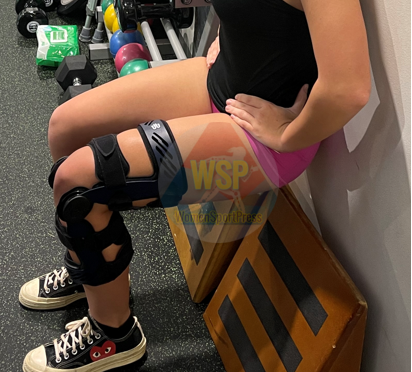
So, that led into our research looking at the cross bracing protocol. It immobilizes the knee and 90 degrees flexion by wearing a knee brace and it reduces the distance between the two torn ends of the ACL and then holds it in a shortened position.
Mostafa Sarabzadeh: For three month?
Prof Stephanie Filbay: It's at 90 degrees for four weeks. Then at each week. The knee is allowed to have more and more movement. At 10 weeks, the brace is unrestricted movement and then the brace is taken off at 12 weeks. But during that time, they're performing a lot of rehabilitation, a lot of strength work, neuromuscular control, weight bearing through the leg. So they're not inactive even when they're braced at 90 degrees. They're doing, you know, things like wall squats held at 90 degrees bridges.
So the first paper we published on this treatment found that 90% of people that underwent that brace had a continuous or a signs of healing at three months on MRI.
So that's 90%, and that was in the first 80 patients. And now there's been over 940 raised and people have been embraced in over 23 countries.
Mostafa Sarabzadeh: so how this protocol could react to different ACL grades or the other stuff you just mentioned?
Prof Stephanie Filbay: As I mentioned earlier, we're running a predictive model at the moment to decide who is most suited to bracing because we think there's certain kinds of variables when it comes to ACL rupture that are best suited to having a thick healing outcome.
So hopefully we'll have research coming out in this area very soon. And we're looking at other patient related factors as well, like hypermobility, age, mechanism of injury, a number of other variables to say if that relates to hip healing potential as well.
Mostafa Sarabzadeh: Awesome, thank you for all of these wonderful works you're doing. How about the inclusion criteria for getting in this protocol?
Prof Stephanie Filbay: that's a great question. And then it depends, right? So that initial study that we published in BJSM on the bracing protocol, everyone within one month of injury was braced. All kinds of comorbid injuries, MCL ruptures, miniscule injuries and all kinds of ACL ruptures, even the most disrupted achieved the 90% continuity rate. But as we're learning, there seems to be a group that may have even better outcomes.
When one asked I injured my ACL 3 months ago. Can I do the bracing? the answer is by 3 months, your ACL was already healed, it would have started that process already, right? So we think it's pretty late to benefit from a mobilization and going through that process.
“ I'd suggest within no later than 3 weeks after injury for entering Bracing protocol“
A person should be psychologically strong enough to go with immobilization. However, people with the surgical pathway, should not think that surgery is a quick fix and saying “ I'll go and have surgery and get fixed and then I don't have to do anything “.
Mostafa Sarabzadeh: yes — that’s a common misbelief seen everywhere. Could we say female athletes have genuinely more potential to succeed by non-surgical ACL rehabilitation? as reported by Grindem and colleagues (2018)
Prof Stephanie Filbay: I don't think the evidence is clear on that. Yeah, I'm not aware. I'd have to look into it. But again, that's the fact that it wasn't a randomized control trial. So the groups aren't quite the same.
That hasn't come up in any systematic reviews as being a consistent predictor a better outcome with non-surgical treatment.
Mostafa Sarabzadeh: Well. The last couple of questions. So have you got any psychological outputs from cross brace protocol or other trials you recently conducted?
“Big knowledge gap is longer-term outcomes”
Prof Stephanie Filbay: Only in terms of psychological and the cross brace protocol, we've only published 12 months outcomes, including the ACL Qual, which is ACL specific quality of life measure. But we need longer term follow up definitely beyond that. And that's the plan to follow people at five years and 10 years. There's research coming out of Sweden analyzing (Narcox cohort) that's looking at healing and relating healing on MRI to other clinical outcomes as well, and patient reported outcomes. So that will be soon published at some point this year as well. So I think we're gonna see more and more research coming out on ACL healing, but big knowledge gap is longer-term outcomes: Long term function, long term reinjury rates and quality of life.
Mostafa Sarabzadeh: What about the osteoarthritis rates as a complication, and other commodities in people who pass rehabilitation alone compared to people who passed the ACL reconstruction?
“Higher rate of radiographic osteoarthritis in people who are surgically treated”
Prof Stephanie Filbay: Yeah, so a recent umbrella review by Kate webster found a higher rate of radiographic osteoarthritis in people that are surgically treated compared to people managed with non surgical treatment.
An umbrella review is a systematic review of all existing systematic reviews. So when it comes to osteoarthritis comparing treatments, that's a good design because there's a lot of systematic reviews out there and they're not all consistent with what they found depending on their year they were published.
Mostafa Sarabzadeh: So what about the meniscus tear as another comorbidity in terms of comparing between rehabilitation and other surgical methodology?
Prof Stephanie Filbay:there was a sweden study published late last year and what they found is that those who are treated with surgery had more new knee injuries after surgery than the non surgical group. And they plotted that in terms of both meniscal injuries, there was additional surgeries required as well. So again, the evidence isn't conclusive and the research design is not powerful.
“ the instability term would feature differently between healthcare provider”
Mostafa Sarabzadeh: So in one of your research works the instability term would feature differently between healthcare providers. So how we define instability, it would be something targeting functionally the muscles and all the tissues around the knee or something structurally targeting the biomechanic of the knee?
Prof Stephanie Filbay: yes, really good question again. It's not so clear for a number of reasons, but I think there's a spectrum of instability, right? So ideally what we mean by instability is that the knees functionally unstable despite sufficient muscle function. So despite sufficient neuromuscular control and strength being regained, there's still a functional instability because the knee gives way. So yeah, true definite instability is that despite muscle strength and neural muscle control, there's a giving way episode. So this causes a person to fall to the ground in most cases and causes an increase in pain or swelling. So that is what I'd call an instability episode, but it does need to be differentiated by other things.
So for example, if we're managing people with Patellofemoral pain, we know the knee can kind of buckle. This can be associated a lot with muscular weakness, causing your knee to buckle more in an anterior direction. So it's not rotary instability. So yeah, and then you can have this sensation where people feel like their knees gliding and sliding a bit. Maybe they haven't fallen down, it hasn't grossly given way. There's no gross episode of instability, but it is that true kind of micro instability. I don't have a clear answer for you. I think there's variations in what we mean by instability. And from a research perspective, we need to define it better, exactly how we assess it and measure it.
Mostafa Sarabzadeh: That's all wonderful remarks from Professor Stephanie Filbay. I hope all the physiotherapists and healthcare professionals were here to listen and take the best they can from our meeting. Stephanie, just to make this interview with a more happy ending, let's share with our viewers and listeners any kind of life changing or inspirational story you want to share here.
Prof Stephanie Filbay: I mean, resilience is a very important trait and nothing builds resilience like an ACL rupture and going through that kind of hardship. And you can come back stronger and you can, people say, you know, I've been through that. I know I can do anything now, but it can make you a stronger and better person even if you don't return to sport because of it. If you look at it in a positive light and if all else fails, you can become a ACL researcher [laughing]. So there you go.
Mostafa Sarabzadeh: Sure, that’s how you did amazingly. Thank you again, for joining our program. I know that these weeks were crazily busy weeks for you and I treasure your contribution to this talk.
Prof Stephanie Filbay: Thank you. No, that was great. It was a good discussion. And I think we chatted about some things to different things and it was good, always enjoyable. So thank you.